Behind the Scenes at HashiConf 2025: Reflections from an Ambassador
HashiConf 2025 was unlike any previous HashiConf I’ve attended — both in scale and significance. As an Ambassador again this year, I had the privilege of experiencing the event from a unique perspective: behind the scenes, within the community, and in the spotlight. From major product announcements and technical conversations to impromptu Minecraft demos, book signings, big stage performances, this year’s conference was packed with energy, insights, and BIG surprises.
And all of it happened against the unforgettable backdrop of San Francisco — a city that never disappoints. I stayed at the historic Fairmont Hotel, which served as both a luxurious retreat and a social hub throughout the week.

When I wasn’t neck-deep in Terraform conversations or conference logistics, I carved out moments to experience the city like a true visitor: riding the iconic cable cars, watching the sea lions at Pier 39, and, of course, sipping tropical drinks under the glowing thatched roof of the legendary Tonga Room & Hurricane Bar. I actually met up with some Azure Terraformers from the Azure Terraformer Discord server!!! So Fun!!!
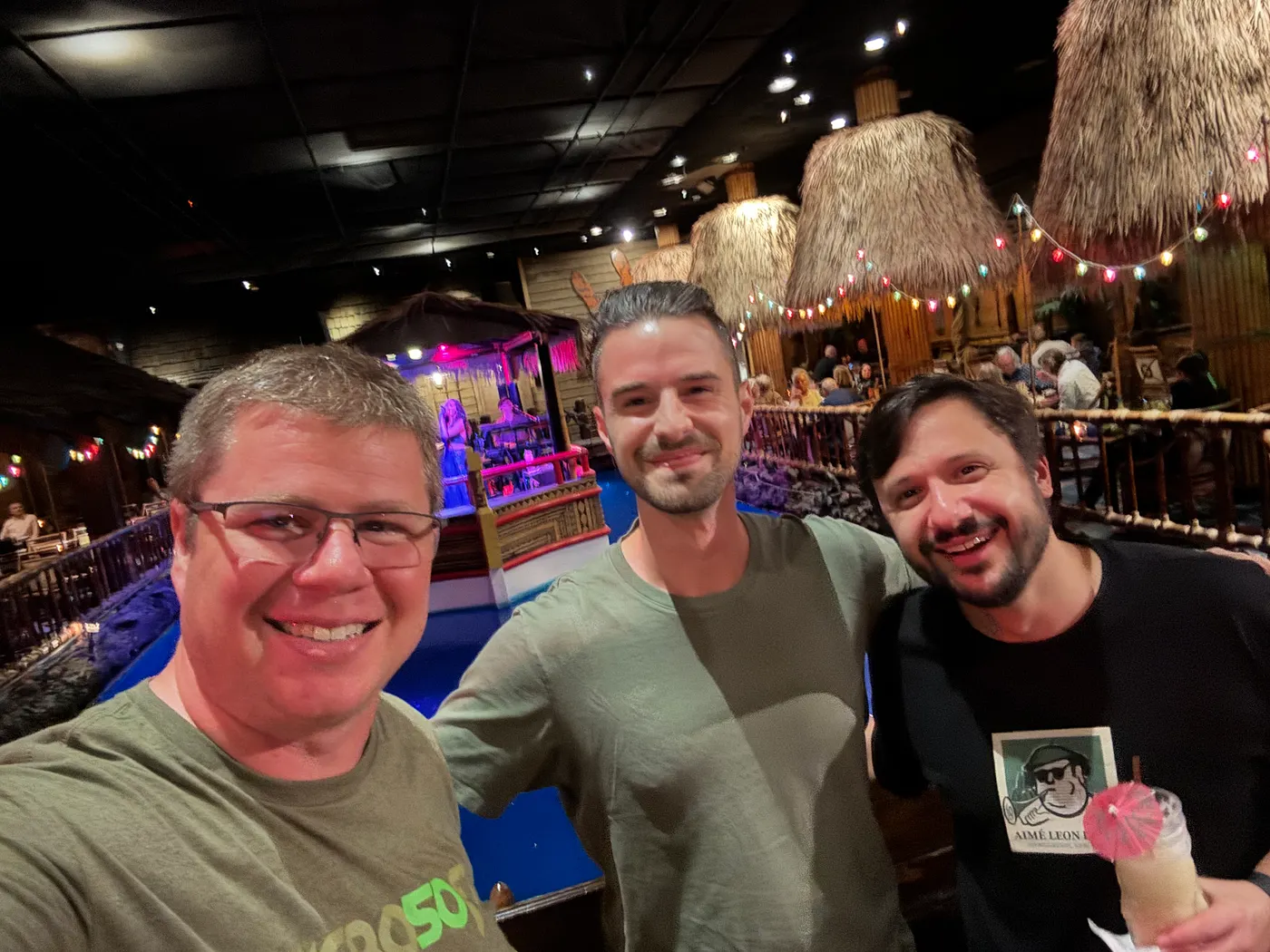
It was a true HashiConf-meets-San-Fran experience, and I wouldn’t have it any other way.
Wednesday: Product Day, HUG and the Calm Before the Storm
Wednesday was packed from start to finish. It began with Product Day, where I spent time in closed-door sessions with HashiCorp Cloud Platform (HCP) product managers, offering direct feedback and insight on everything from Terraform workflows to cloud integration patterns.
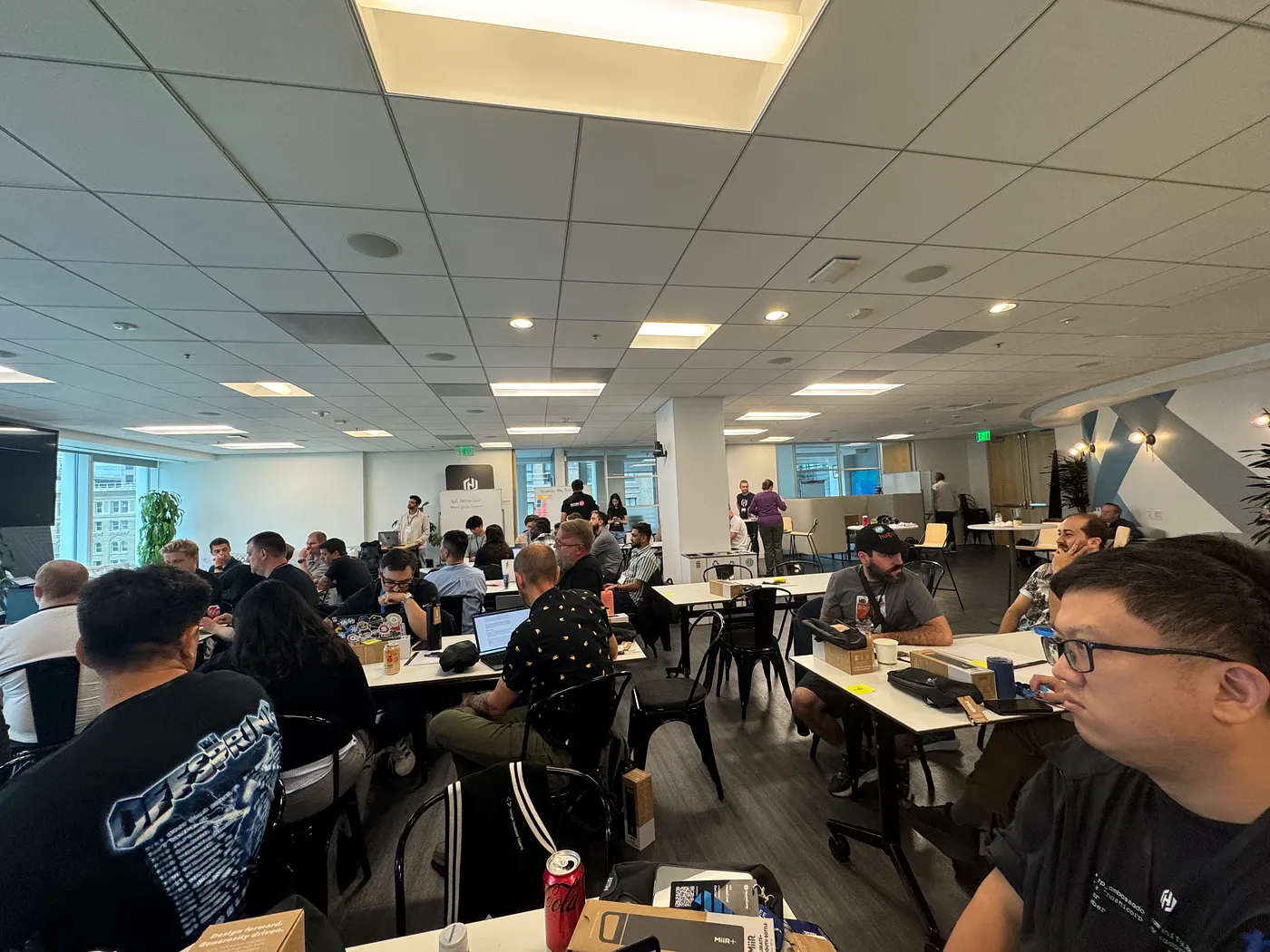
These were high-trust conversations — forward-looking, strategic, and, for now, entirely confidential. Being part of those discussions felt like standing at the edge of what’s next for IaC, helping shape tooling for practitioners like me.
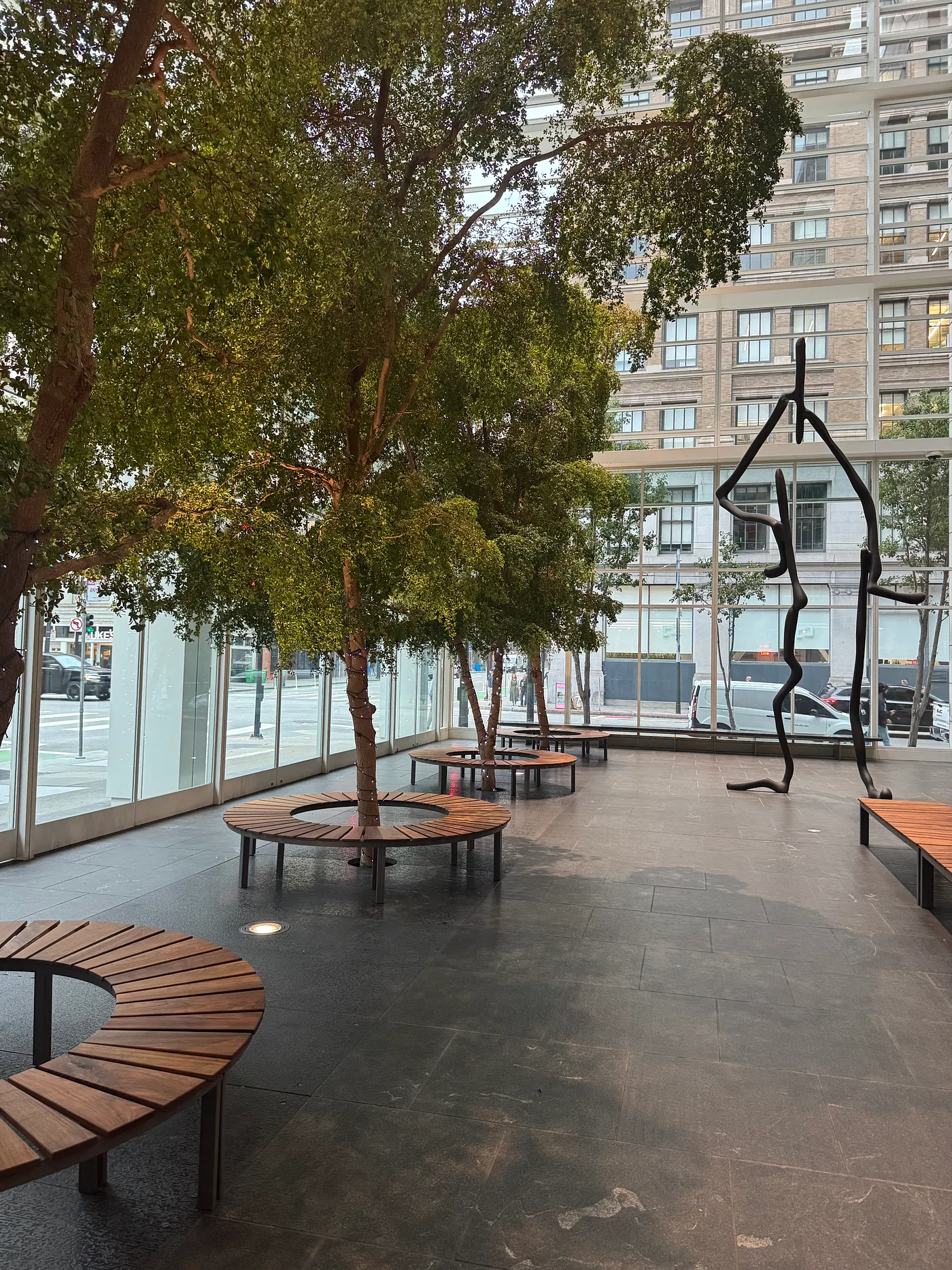
One of the most meaningful parts of the day, though, was visiting HashiCorp HQ — possibly for the last time. With the IBM acquisition still fresh, there was a quiet, emotional weight to walking those familiar halls again. It felt like saying goodbye to a place that had been more than just an office — it was a cultural anchor for the HashiCorp community, the birthplace of so many of the tools and values that brought us all together. I’m incredibly grateful I had a chance to be there one last time.
After a full day of product immersion, the evening shifted gears with the HUG — HashiCorp User Group party.
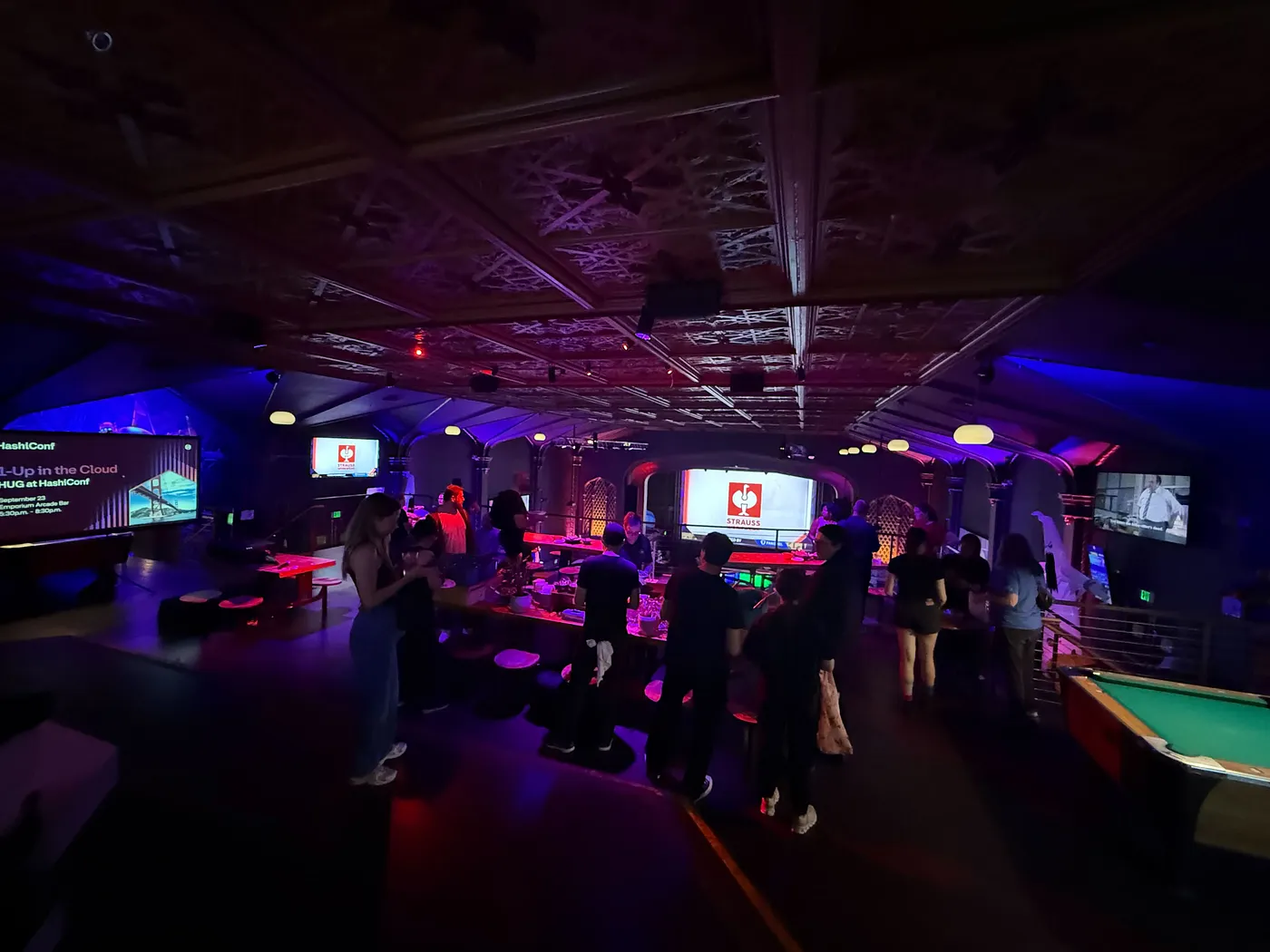
It was a full-blown celebration, bringing together community members from around the world. No slides, no demos, no sessions — just a big, vibrant party where we got to connect, catch up, and let loose a little before the official conference kickoff.
Somehow my friend Mattias and I closed down the pub again this year with deep thoughts and conversations about our experience as “influencers” in the HashiCorp and broader DevOps and Cloud Computing communities.
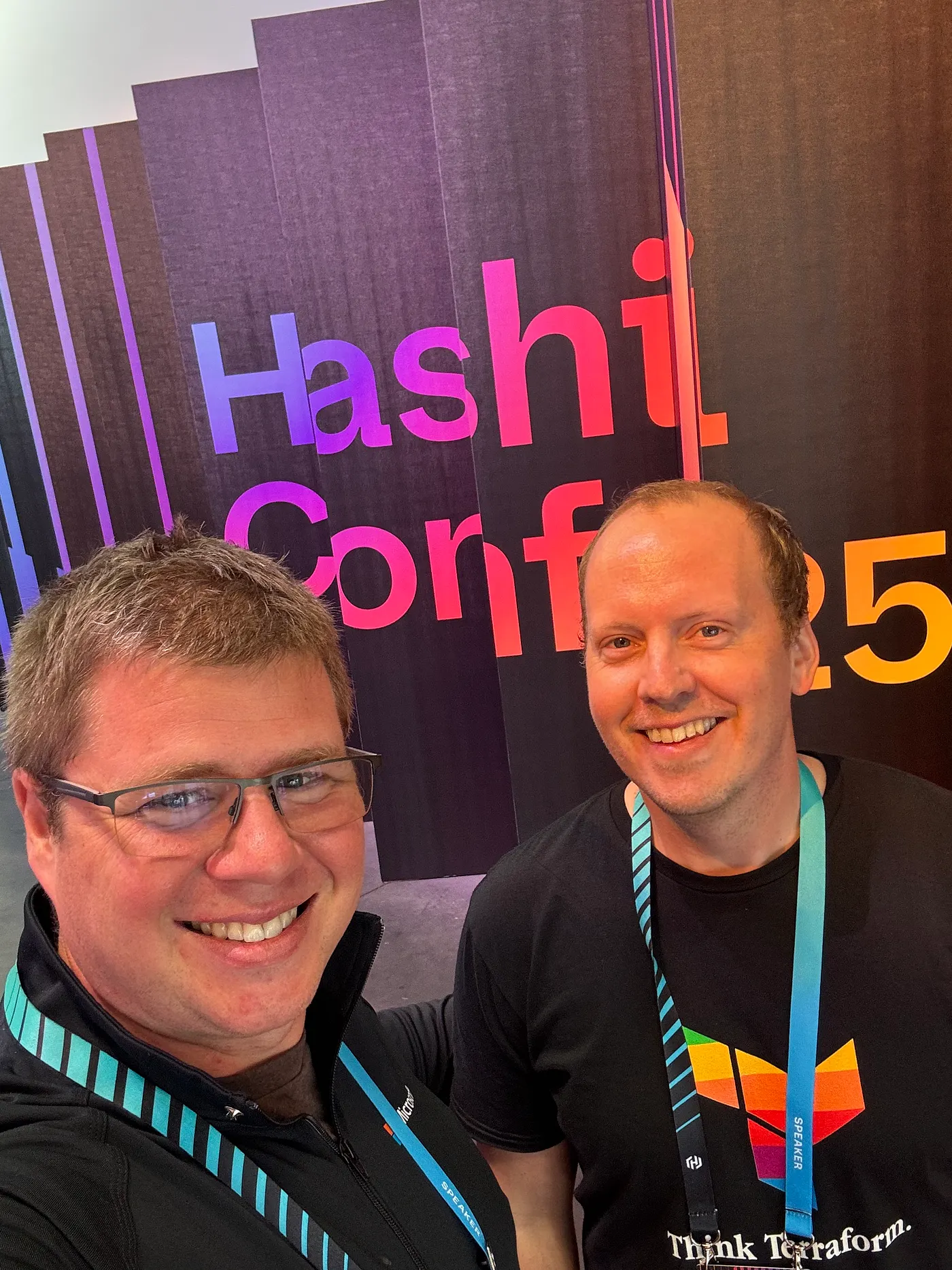
These are the moments that make HashiConf more than just a conference — it’s a true community.
Thursday: Keynotes, Recognition, and an Unexpected Line
Thursday began with the Day 1 keynote, and this one was truly unforgettable.
Armon took the stage to deliver the opening message, and during that keynote, he honored a group of eight Ambassadors — myself included — with a special recognition to commemorate the 10th anniversary of HashiConf. I was floored.
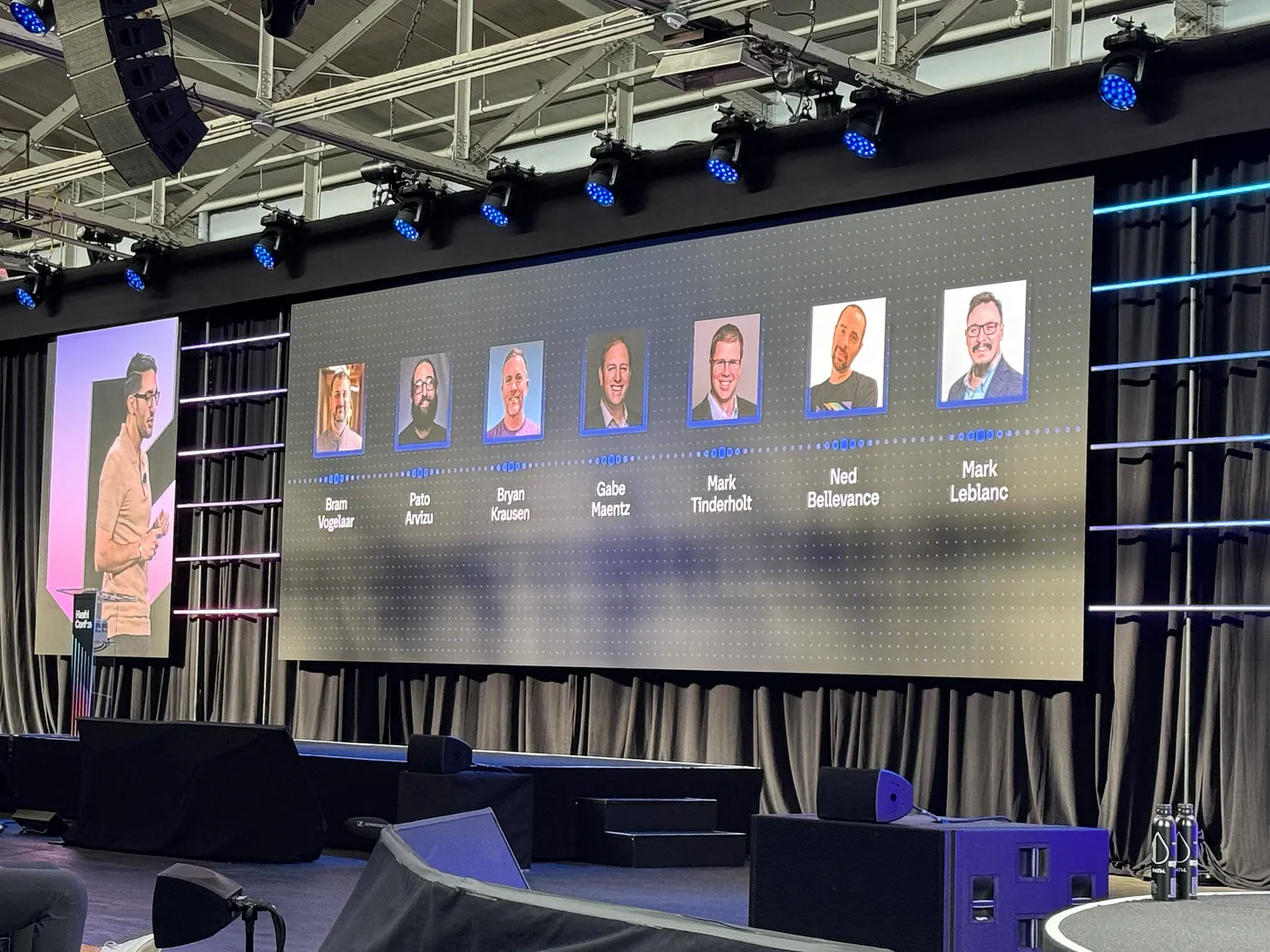
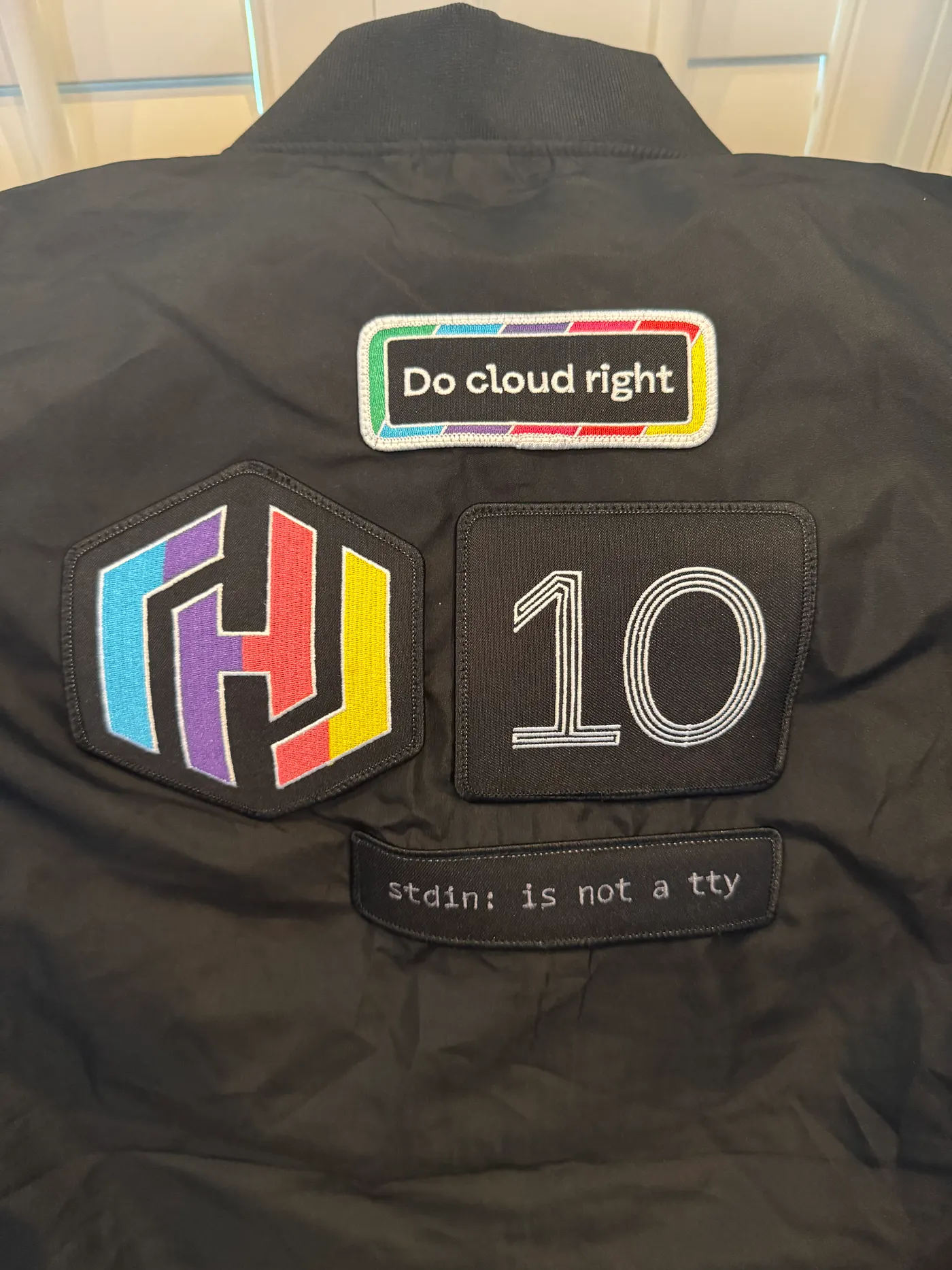
Each of us received a custom, limited-edition 10th Anniversary HashiCorp Bomber Jacket — a sleek piece of swag that immediately became the most coveted jacket at the event.
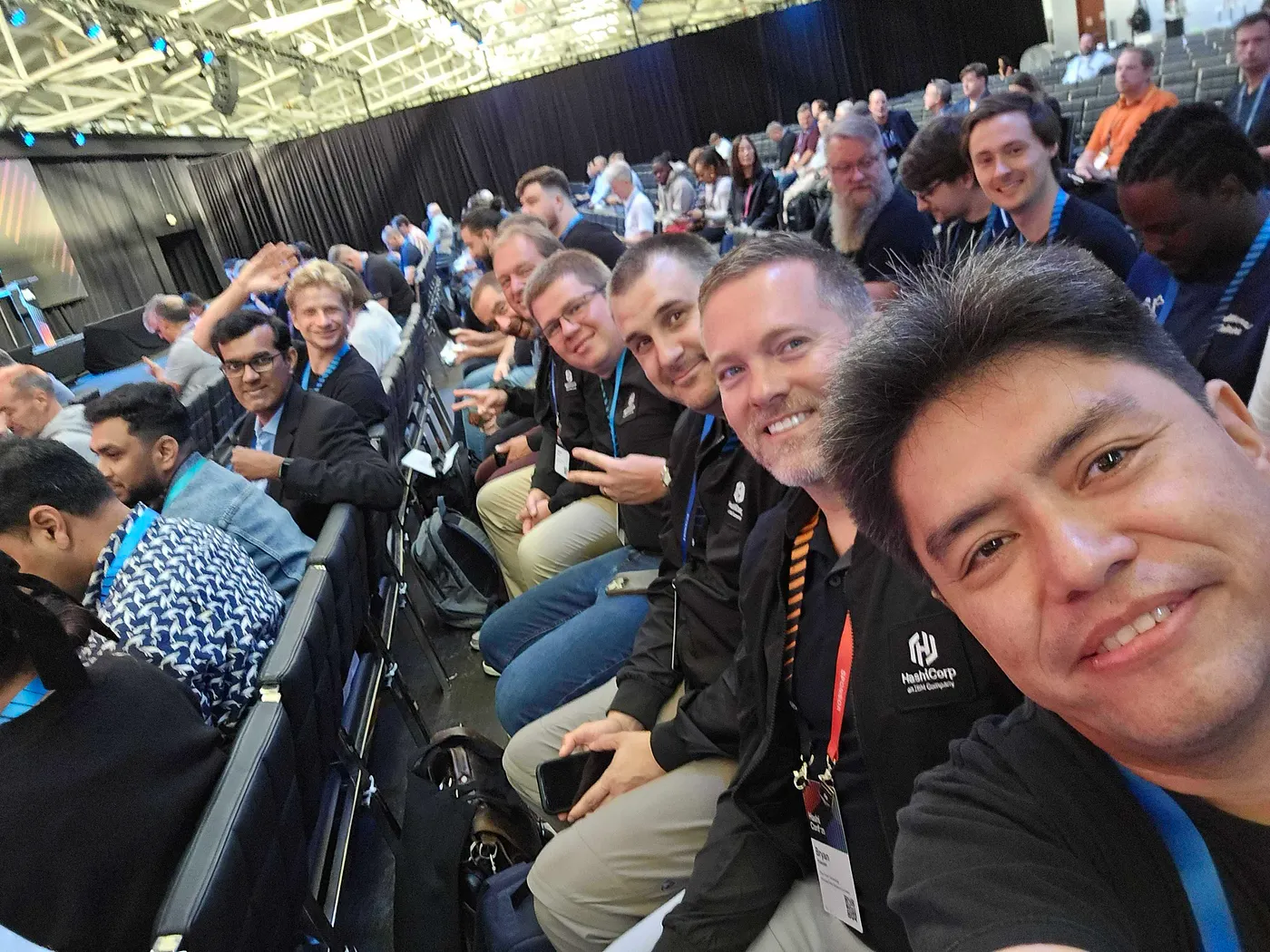
It wasn’t just a jacket; it was a symbol of community, contribution, and shared purpose. I was honored, overwhelmed, and — if I’m being honest — a little shocked.
After all, I’ve only been publicly active in the community since 2023. While I’ve been using Terraform since 2015, nearly all of that work has been inside companies — training teams, scaling platforms, and pushing for automation adoption. It wasn’t until recently that I started contributing in a more public way. I couldn’t help but think of Anton Babenko, who wasn’t in attendance this year but has been a cornerstone of the Terraform community for years. He absolutely deserves a place on that squad — definitely more than I do.
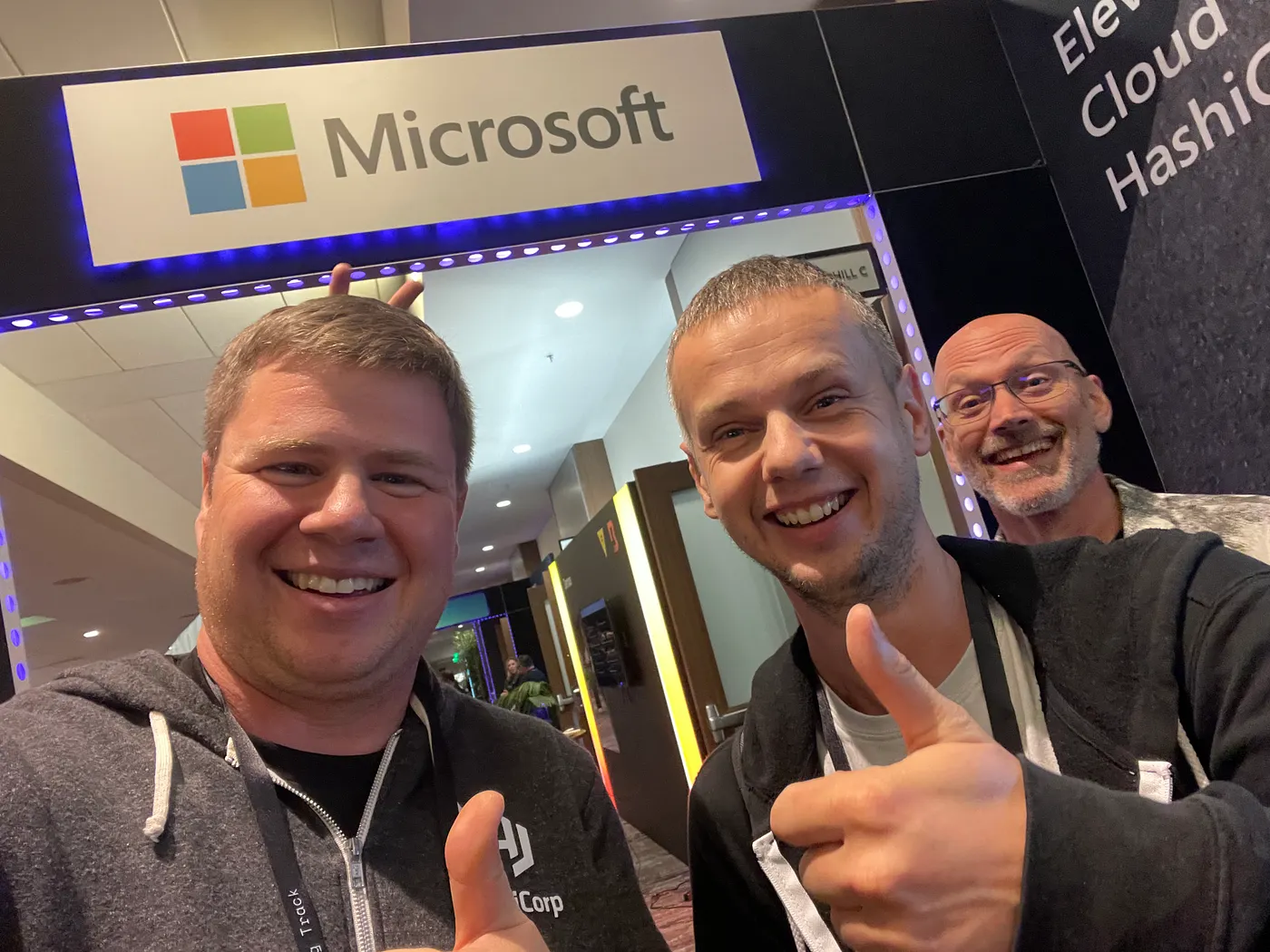 Anton and me at the Microsoft Azure booth during HashiConf ‘23
Later that day, I participated in an Alpha Azure Pro Cert feedback session. I pushed hard for the inclusion of more Azure-specific platform knowledge. The AzureRM provider is its own beast — very different from AWS — and a certification that aims to prove Azure Terraform knowledge has to reflect that. It shouldn’t just be a Terraform cert with Azure on the label; it needs to speak to the real, platform-specific experience.
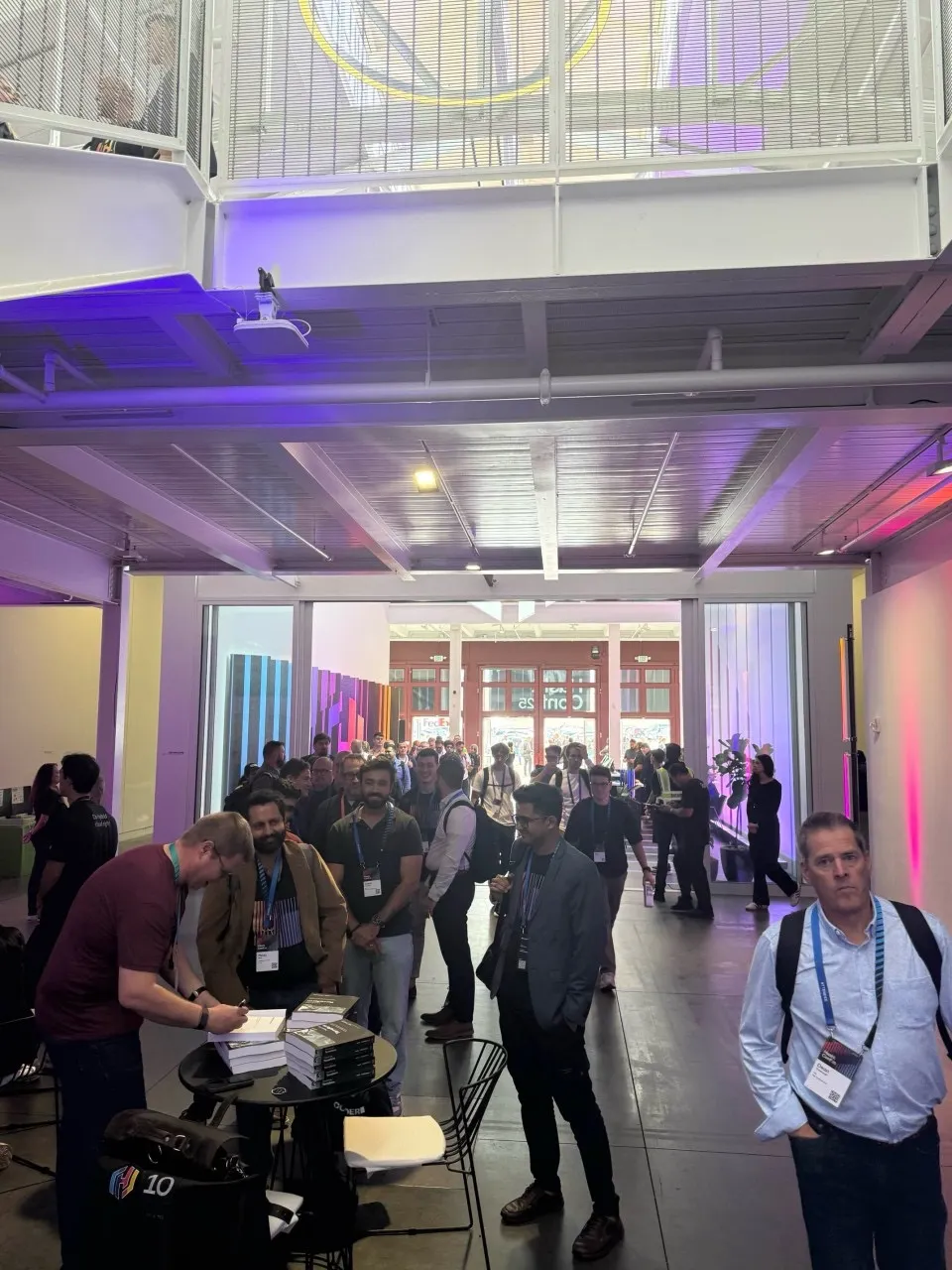
Then came the book signing. I rushed over from Building C and ran into Marcelo, who teased me about the “huge line” waiting. I assumed he was being sarcastic — but he wasn’t. The line stretched through the main foyer and out to registration. As I walked past the attendees waiting to meet me, I couldn’t help but joke aloud, “What’s this line for?” pretending to be just another bystander.
I greet every reader with the same three questions: “What’s your name?”, “Where are you from?”, and “What’s your favorite cloud?” That last one usually invites some playful banter — especially if they know I work at Microsoft. But my book covers AWS, Azure, and GCP equally.
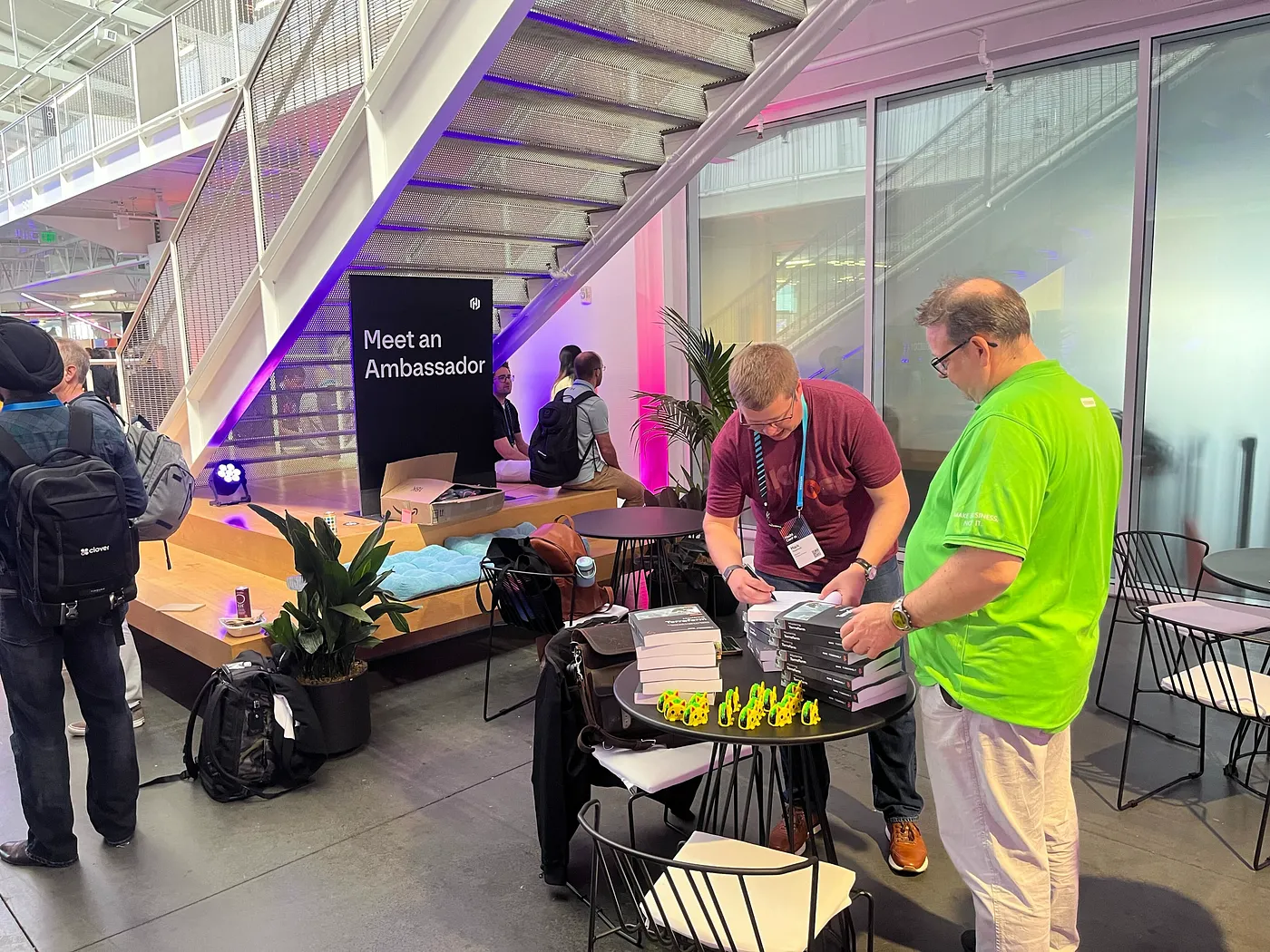
It’s always a joy to turn that quick exchange into a longer conversation about their Terraform journey, automation challenges, or workplace experiences.
After the conference, we gathered for the Ambassador Party at Radhouse. If you want an example of spontaneous group comedy, look no further than when I ordered my buddy Manu (yes, he works for AWS) a beer. Radhouse is a German-style brewhaus, complete with steins shaped like boots. When the waitress came around, I insisted Manu be served one of those boots. And sure enough, he got the boot.
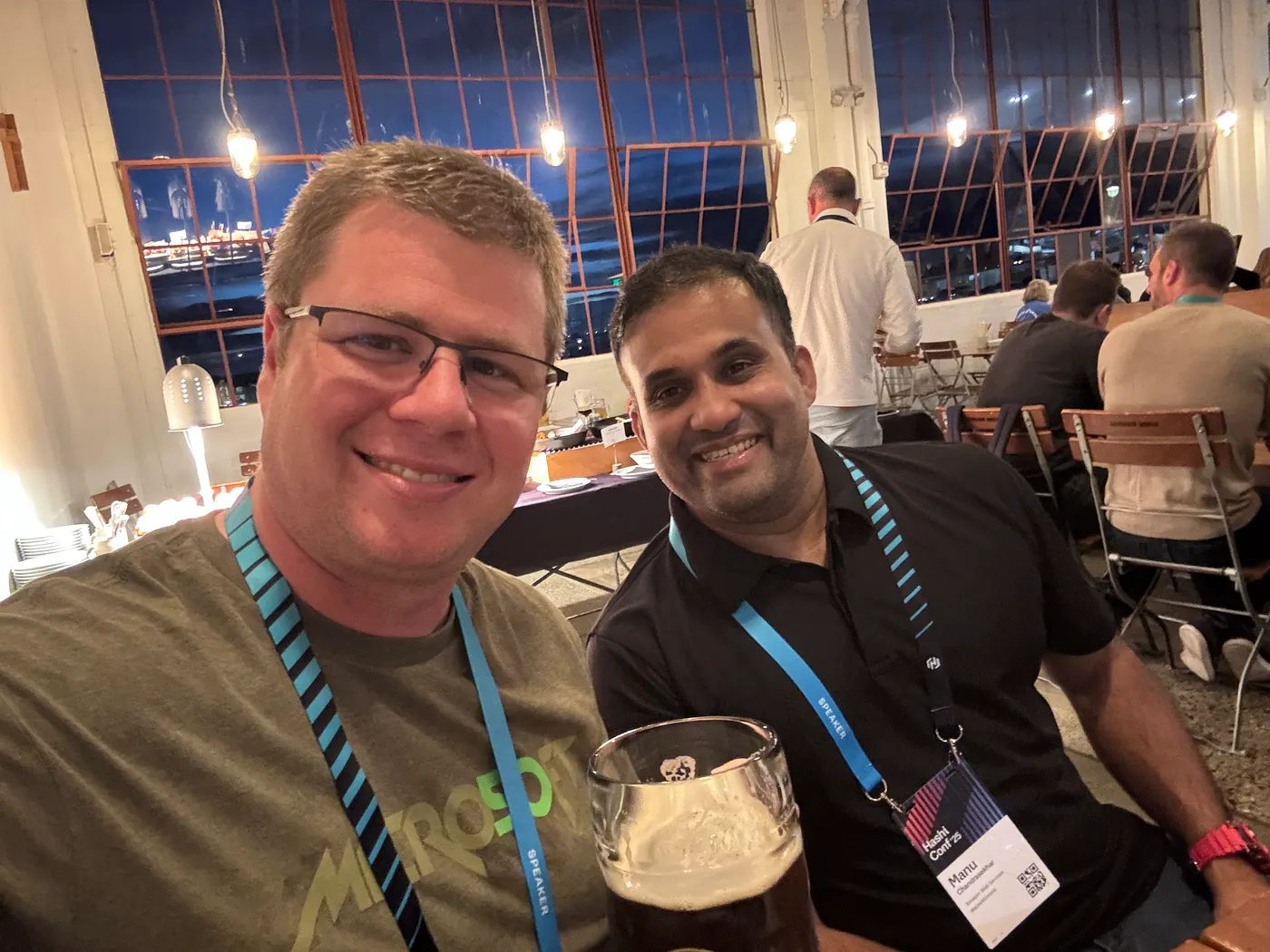
For the rest of the night, the Ambassadors egged him on to drink from it, much like wedding guests clinking glasses to coax a kiss out of the bride and groom. Every so often the whole group would turn toward Manu, cheering and goading him into taking another gulp from his oversized boot. It was ridiculous — and hilarious. Manu helps me organize the HashiCorp User Group in Columbus, Ohio, and even though we work for major competitors, our friendship is proof of the camaraderie in the HashiCorp ecosystem. It’s a perfect example of my favorite adage: HashiCorp is like Switzerland — neutral territory in a world dominated by opinionated giants.
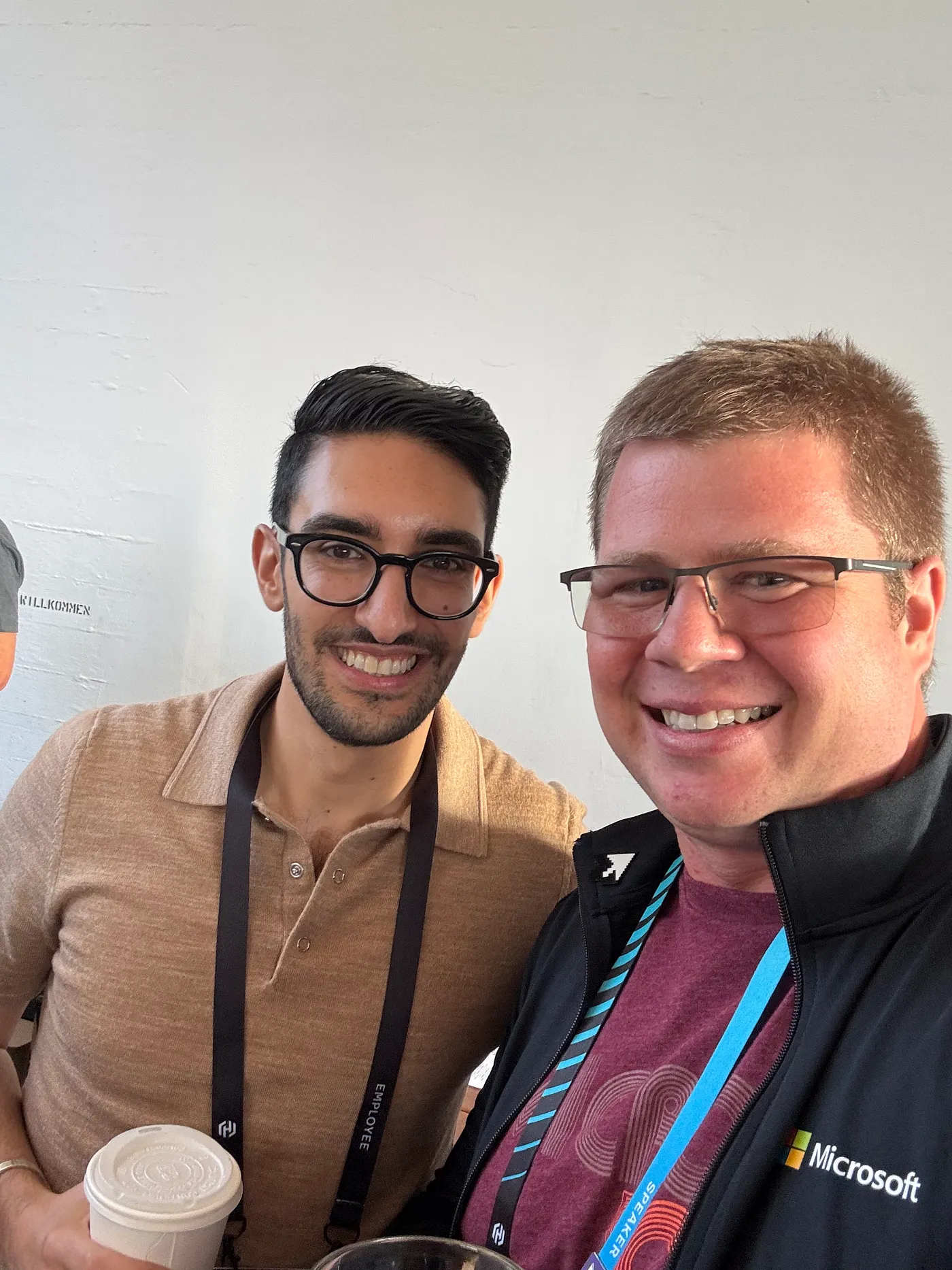
Armon also makes it a point to show up at these Ambassador parties. I usually try to hang back and let others have their chance to talk with him — I imagine someone like Armon gets more than enough attention, and I don’t want to add to the crowd. But every time I’ve spoken with him, I’ve been struck by how genuine and down-to-earth he is — easily one of the most real people I’ve ever met, and, in fact, probably the only billionaire I’ve ever met.
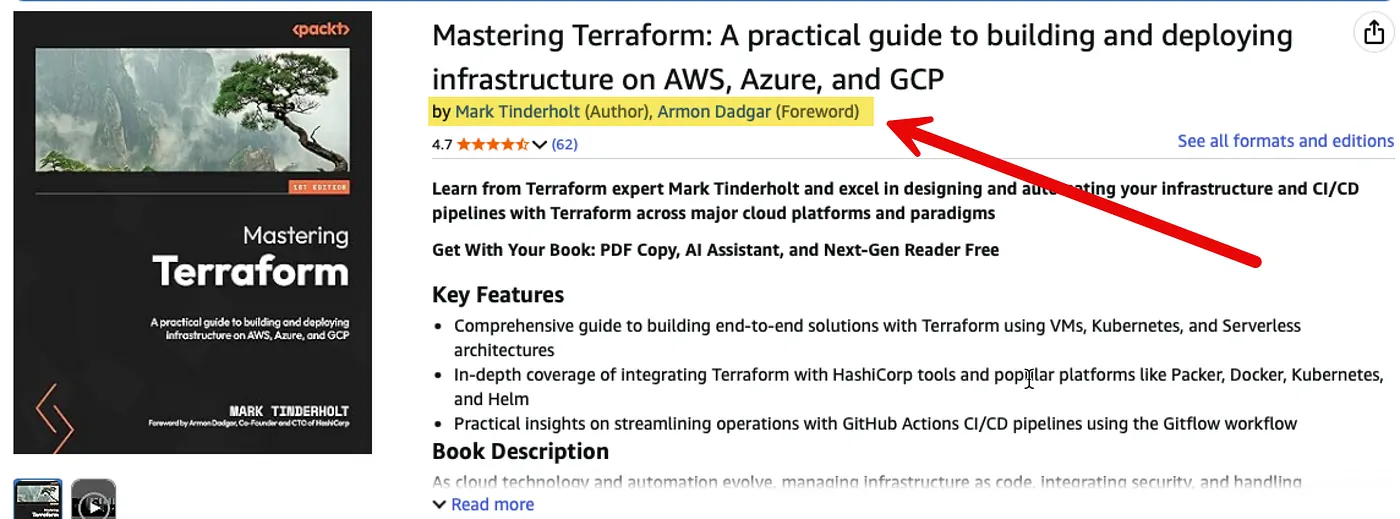
He was generous enough to write the foreword to my book, and I still get a thrill seeing Mastering Terraform on Amazon with his name listed alongside mine. To have Armon Dadgar, co-founder of HashiCorp, connected to my work in that way is something I’ll always be proud of. It was pretty cool.
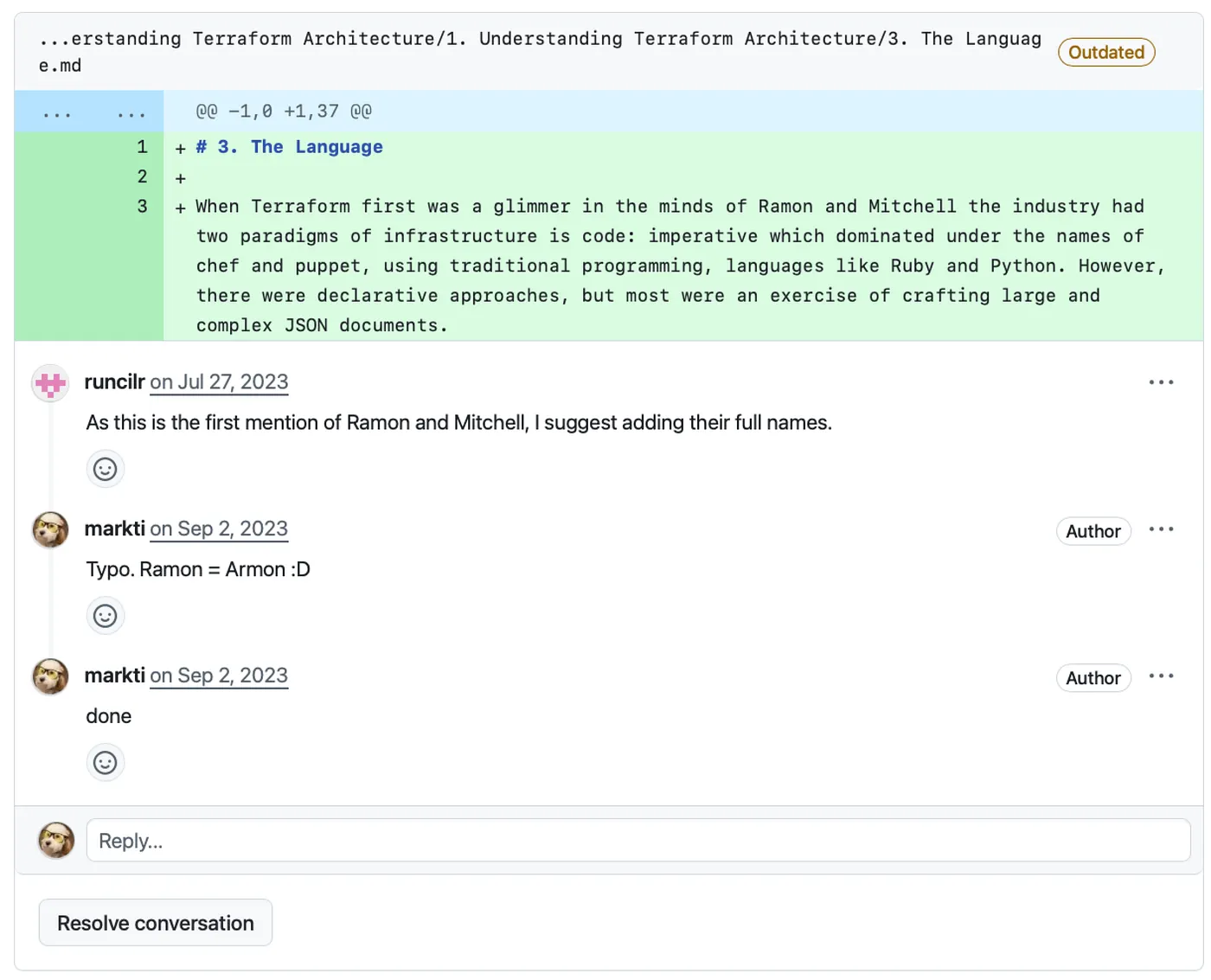
Please don’t judge me Armon… It was late… I blame autocomplete xD The way I wrote the book was a bit unconventional. Instead of using a traditional publishing workflow, I drafted everything in Markdown with Ulysses on my Mac, and the entire manuscript lived in GitHub — it still does, but in a private repo. To make it all work, I even bought a license for the Azure Terraformer GitHub organization — just so I could invite Armon to the repo and have him submit a pull request on my book. I would jump at the chance to work on another project where Armon and I are submitting PRs to the same repo!!!
Friday: Demos, Keynotes, and a Bit of Chaos
Friday opened with the Day 2 keynote, and it didn’t waste any time getting big.
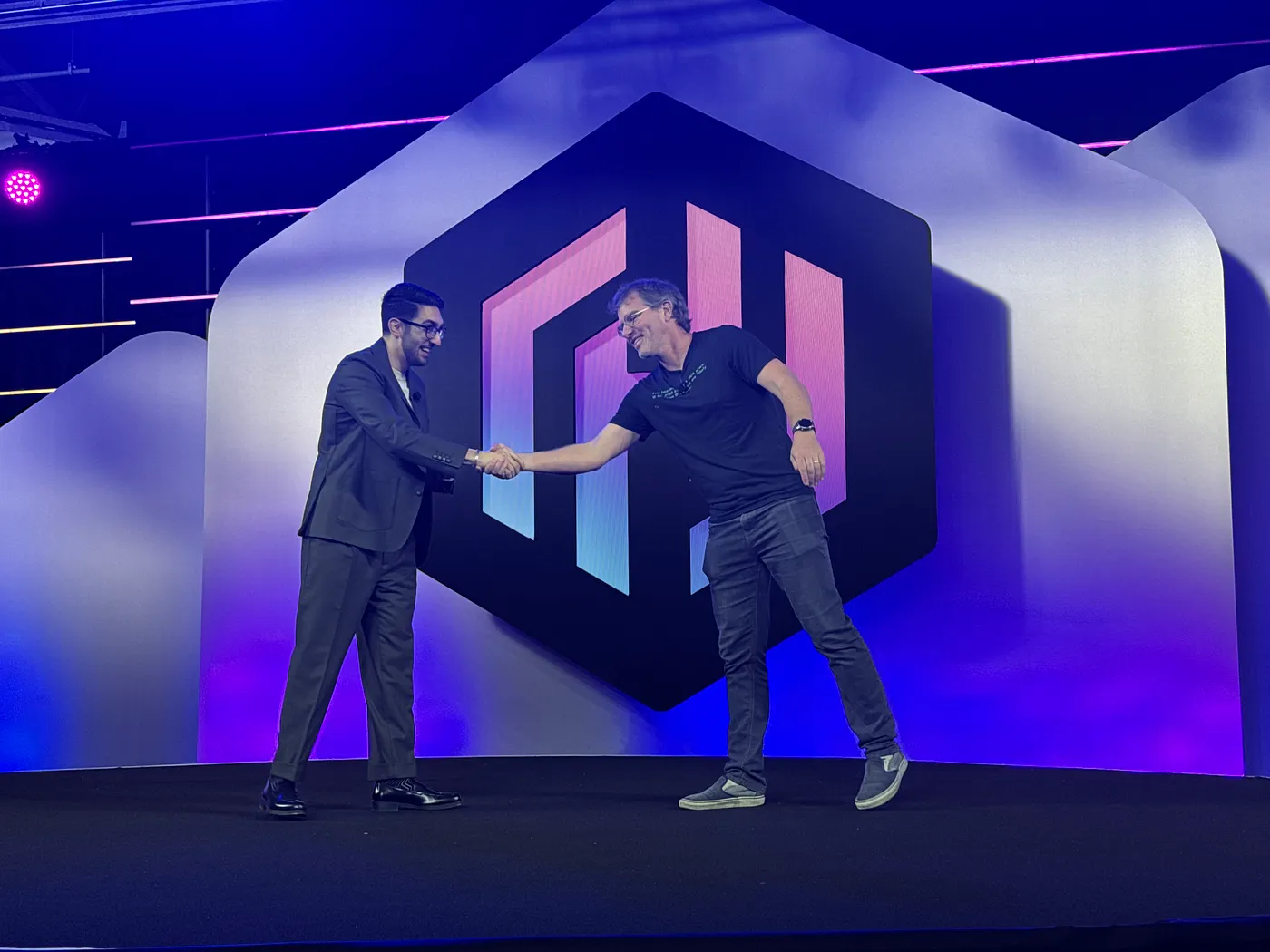
Microsoft’s Brendan Burns — one of the original creators of Kubernetes and a key figure in cloud-native infrastructure — took the stage to share his thoughts on the evolving relationship between Infrastructure as Code and AI. Seeing a top Microsoft executive participate in the keynote was exciting and validating. It signaled a deepening collaboration between Microsoft and the Terraform ecosystem, and Brendan’s perspective brought a thoughtful, platform-aware angle to the broader conversation around automation, developer tooling, and cloud strategy.
When Armon Dadgar and Brendan Burns discussed the future of IaC, I loved a visual Brendan used:
“When automating IaC with AI agents, we need to be careful not to approach it like creating a self-driving car with robot arms dangling off of it.”
(I’m paraphrasing — check the Day 2 keynote for the exact quote.)
His point is clear: today’s Infrastructure-as-Code is operated entirely by humans. The most efficient way to introduce AI agents — whether for some tasks or many — probably won’t look like the way we operate today.
That said, we should recognize there will be a long transition as more responsibility and trust shift to agents. This requires action from both human operators and the control planes themselves.
Even with that transition, I find it unlikely that AI agents will have 100% ownership (at least in the near term). For the foreseeable future, humans will stay involved — whether in authoring, reviewing, approving, or verifying. In fact, every stage of the IaC process may remain a shared effort between humans and agents.
What’s here to stay?
- Declarative desired state stored in a versioned, auditable system of record (code in Git repos).
- Reconciliation between developer intent, last known good state, and actual infrastructure (think terraform plan).
- Non-stateful actions to bring systems back to a healthy state (break-glass scenarios when automation hits sharp edges in the control plane).
But the biggest surprise was yet to come.
As the keynote drew to a close, Armon welcomed a surprise guest to the stage: Mitchell Hashimoto himself. The crowd erupted. It was an emotional, unexpected, full-circle moment — especially fitting for the 10th anniversary of HashiConf.
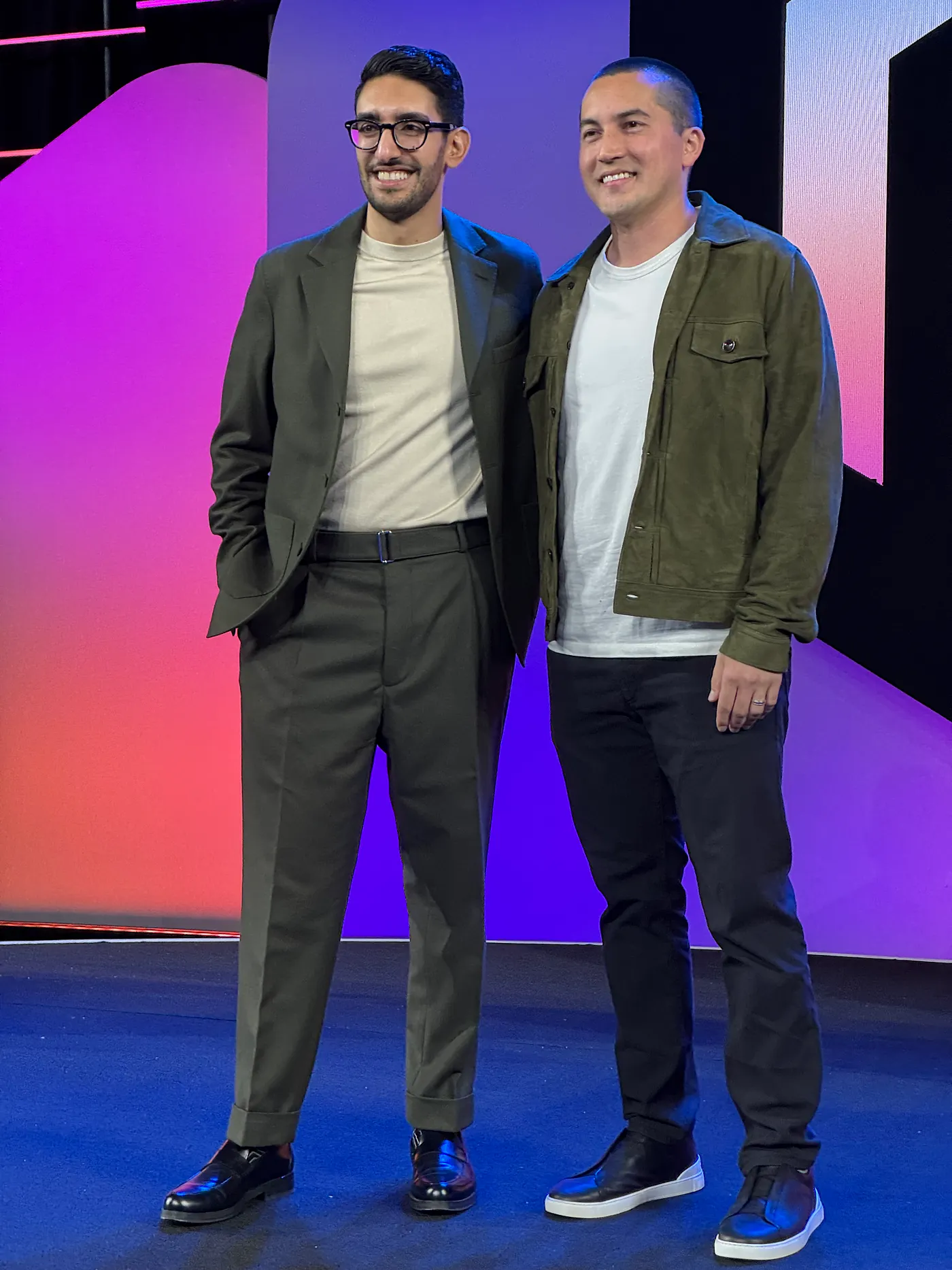
Mitchell was clear that he wasn’t “back” in any official capacity, but his presence meant something. It meant a lot. To see both Armon and Mitchell together again, sharing the stage where it all began, was a powerful way to mark the milestone. For many of us in the room, it was the highlight of the entire conference.
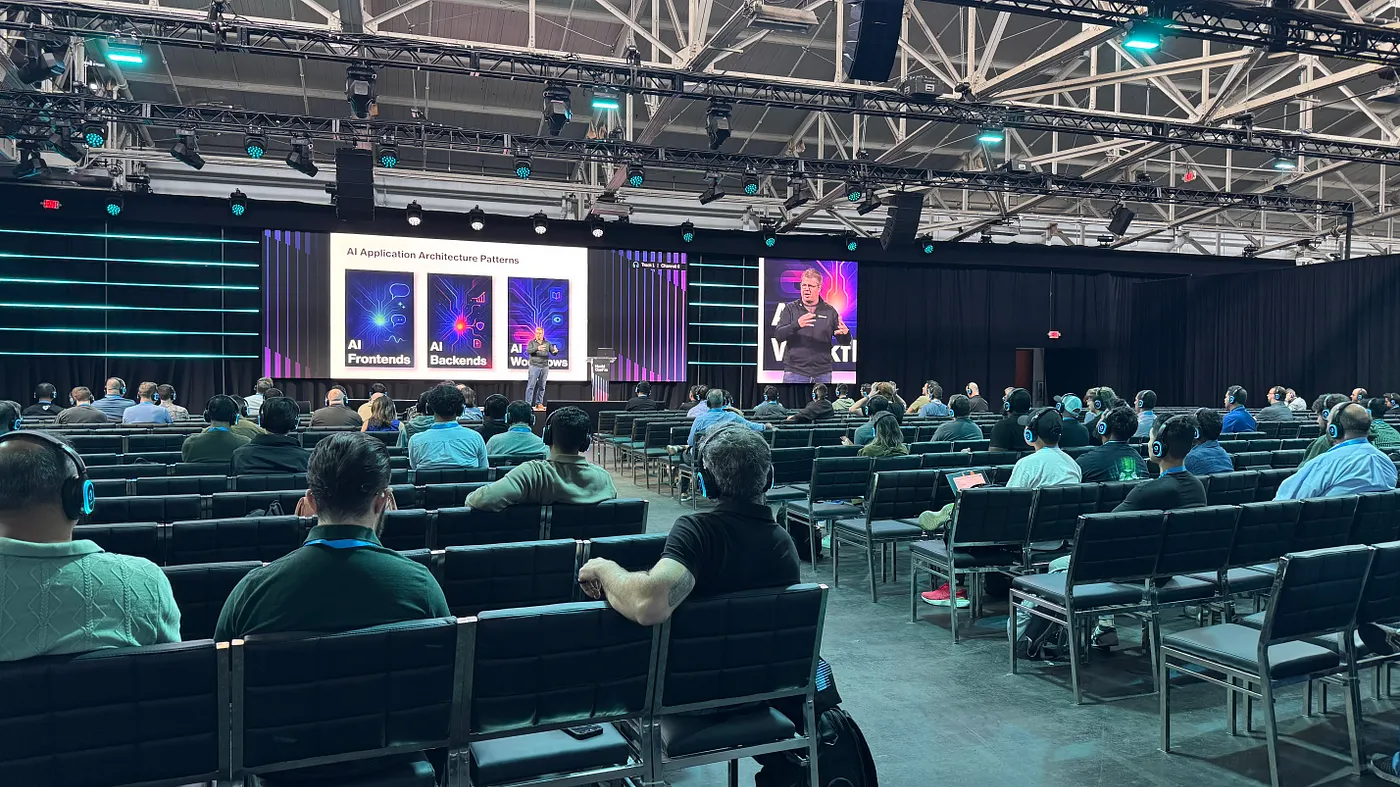
Then came my own talk, and to be honest, it was a bit chaotic. I didn’t get a chance to do any stage familiarization beforehand, and I ran into several A/V technical issues. My demo — based on the newly GA’d Terraform Stacks — had been fragile all week. I’d spent the previous two days fixing it in real-time. At the last minute, I walked up to the Terraform booth, somewhat desperate, and said: “My demo is broken. Please help.” To their credit, they worked some behind-the-scenes magic and got enough of it functioning for me to do a partial live demo on stage. I only had 30 minutes, but I was incredibly grateful that I could show something — anything — live.
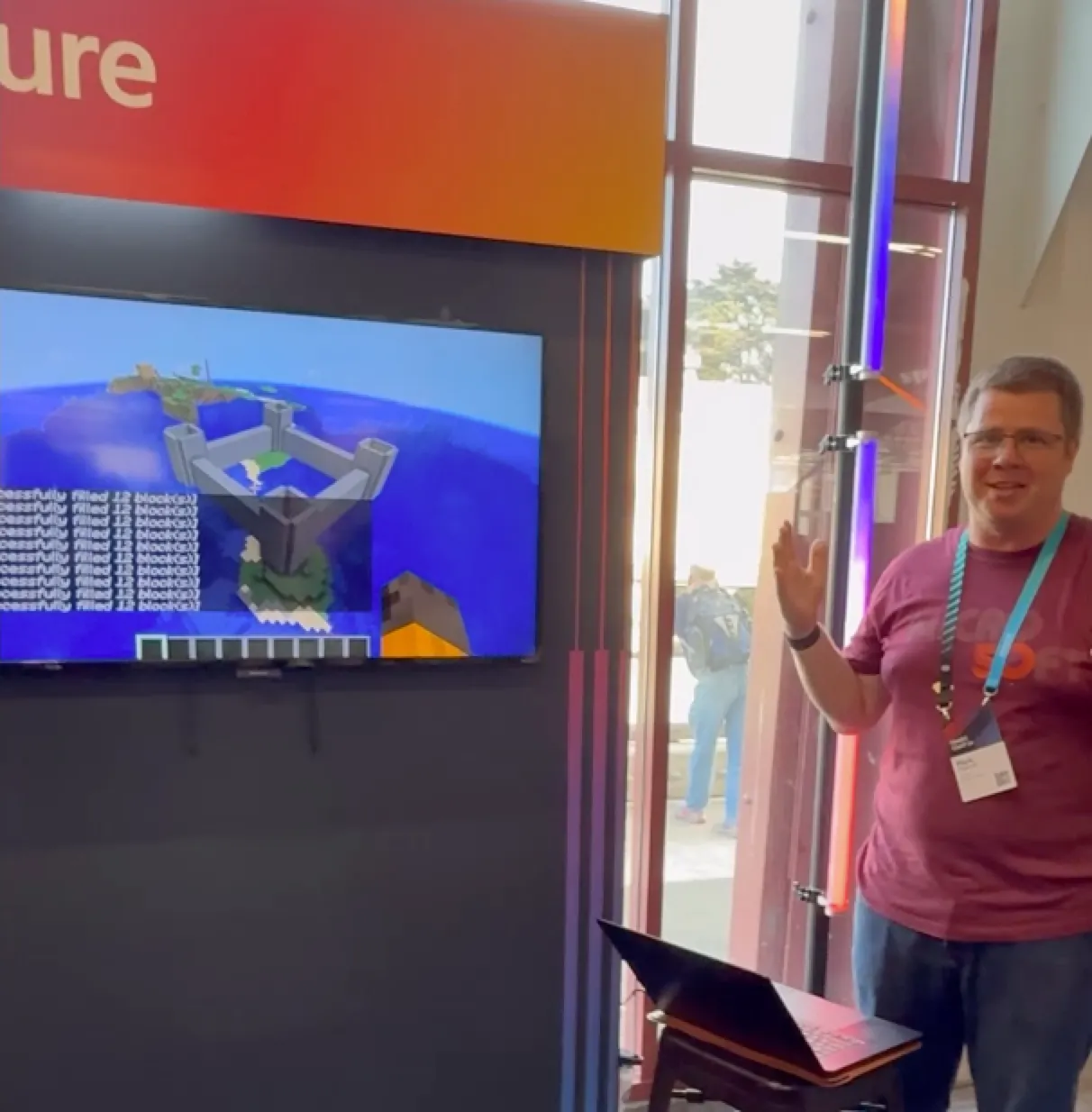
Later in the day, I gave an impromptu Minecraft demo at the Microsoft booth, automating the creation of a castle to the delight of the crowd. It drew a lot of curiosity (and camera phones), and I had some great follow-up conversations with folks from GitHub and Microsoft Developer Relations who were already hanging out by the booth. To close out the day, I had a very personal full-circle moment of my own. Last year, Armon signed a copy of my book. This year, I really wanted Mitchell’s signature too. Thanks to the quiet orchestration of Alexandra, Nic Jones, and Chris Williams, that wish came true.
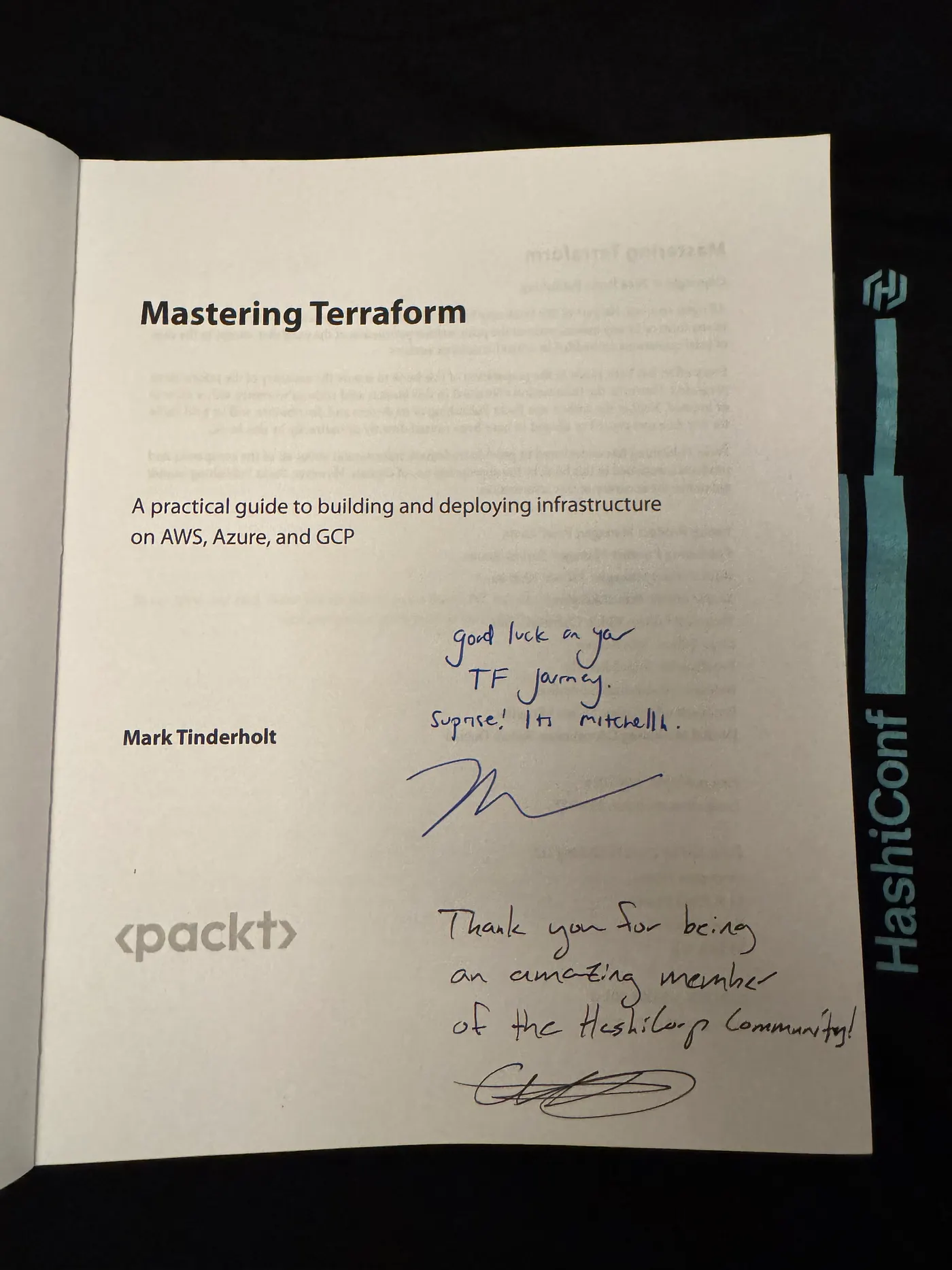
It might seem small, but for someone who’s looked up to these folks for years, having both of their signatures in my book about what THEY built means the world.
Reflections on the Announcements
Among the biggest announcements were Terraform Search, Terraform Actions, and Project Infragraph — each of which could significantly shape how we approach Infrastructure as Code in the future.
Terraform Search stands out for its potential to impact tools like our Azure Export Tool for Terraform. I see it as especially valuable for import scenarios, where you’re trying to reverse-engineer existing infrastructure. I’m curious whether this is already supported in the AzureRM provider or if that capability still needs to be integrated.
Terraform Actions reminded me of AzAPI actions. The question here is whether these new Actions provide type safety and tighter integration, or whether AzAPI’s generic schema-based flexibility still wins. The demos suggested Actions could bridge to other automation platforms — GitHub, Ansible, and more. I saw a compelling use case involving a triggered GitHub Action from Terraform, which opens the door to some powerful workflows.
Project Infraraph is probably the most exciting new product at HashiCorp. Great idea! I have many, MANY thoughts on this one. The potential applications for advanced cloud landscape management and governance are absolutely enormous! (Sorry this is long…. 😅🤓)
First, I hope HashiCorp in addition to amazing operational capabilities for resources under Terraform management I hope they lean into the visibility and operational scenarios around resources unmanaged by Terraform. These resources matter too!!! A lot, sometimes even more so than Terraform managed because it’s easy to forget about them! 😅
We need to find a more effective way to bring them under management or help IaC practitioners work more effectively with them with better visibility and dependency tracking!
This hits very close to the mark on something I have been advocating my favorite cloud 😉 to be doing for years: a Drift Detection Service.
Such a solution needs to weave what’s deployed (actual), with last known good (terraform state), and developer intent! This means we need to integrate VCS systems and have rich context awareness NOT JUST of what all the resources there are but where they live in state, where they live in code and is there a delta between them!!! 🙌
Whether it’s 100% humans doing the job or (more likely) a shared responseability split between agents and humans the core problem domain that IaC solves doesn’t go away!
It would be easier if the control planes did this and then surfaced the data for ISVS like HashiCorp to create a single pane of glass but if they control plane isn’t interested I guess you have to roll your own and hope they figure it out eventually!
Also, I can’t believe Microsoft Azure wasnt a launch partner.
We have the best, most consistent and comprehensive control planes with advanced built-in queryability through ARG (Azure Resource Graph)!!! It’s not even close.
We’re practically handing the capability to integrate Azure “inventory” into “single pane of glass” 3P ISVs on a silver platter.
Leaving on a High Note
I left HashiConf 2025 on a complete high, feeling both inspired and recharged. Whether it was reconnecting with old friends, meeting new faces at the booth or the book signing, being honored as an Ambassador, or just sharing a laugh at the Tonga Lounge, every interaction reminded me why this community is so special.
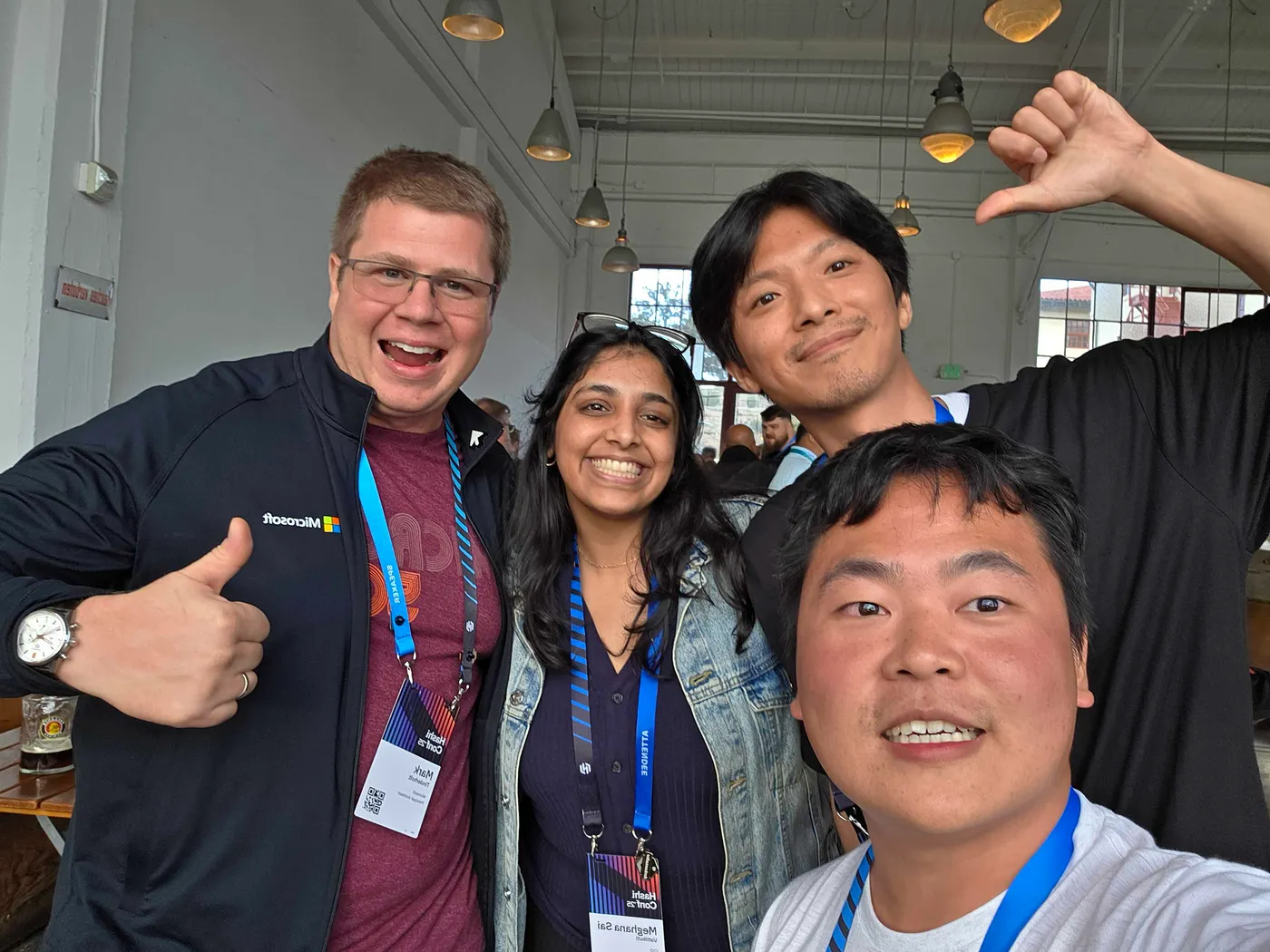
And of course — I’ll never forget receiving that 10th anniversary bomber jacket. Then, later, standing on stage with all other ambassadors while Armon and Mitchell both acknowledged our work, is one I’ll carry with me for a long time.
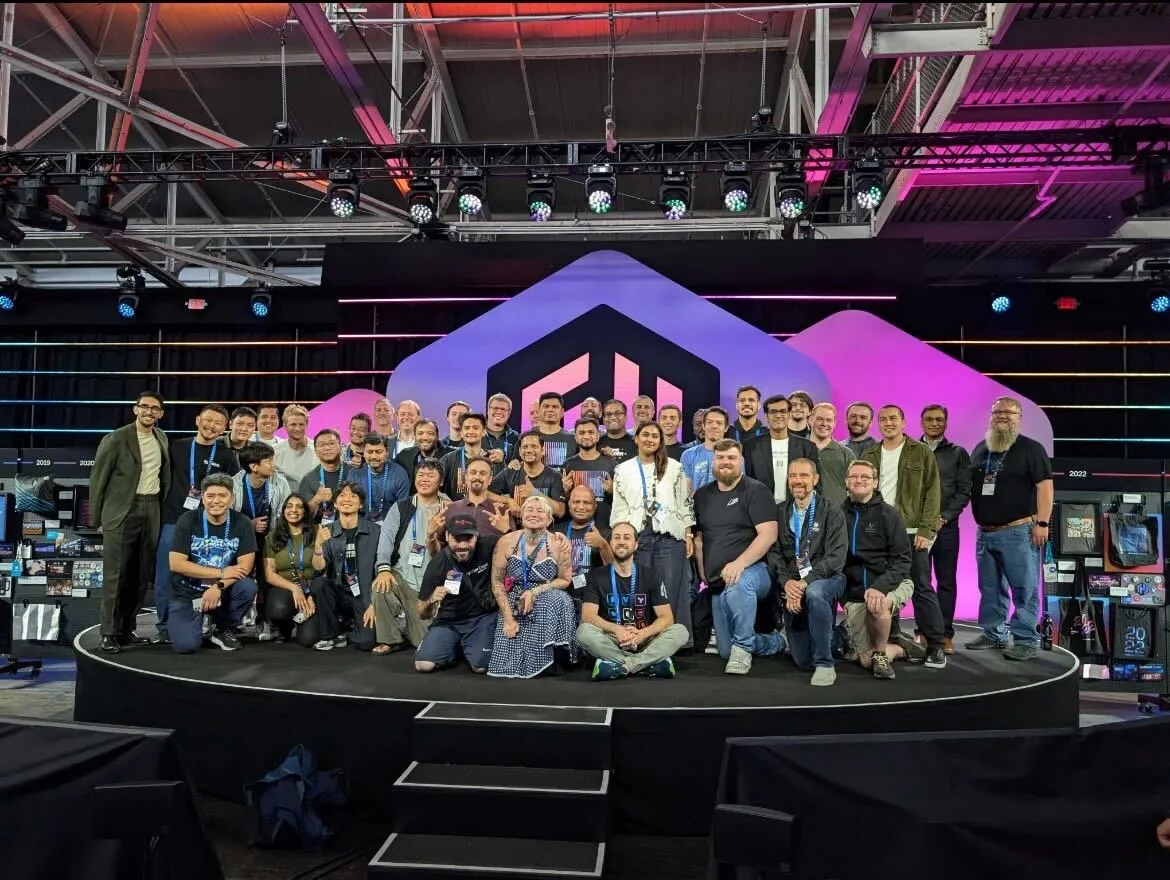
HashiConf is more than just a tech conference. It’s where ideas are shared, friendships are formed, and the future of infrastructure is dreamed up — together.
Until next year!
Happy Azure Terraforming!!!